All About the Cervix
What do you know about your cervix? We find that many of us aren’t well informed about our cervixes, but it is such a dynamic and interesting part of our body and does so much during our fertility, pregnancy, and birth journeys. So, we have compiled a blog post to give you the 411 on your cervix! This comes after our Instagram series on the cervix in honor of January’s Cervical Health Month.
Let's start with the basics... What is a cervix?
The cervix is a canal that connects your uterus to your vagina. It comes from the Latin word “neck” and is sometimes called the “neck of the uterus”. In the image below, you can see that the cervix in a non-pregnant woman, tilts more towards the back.
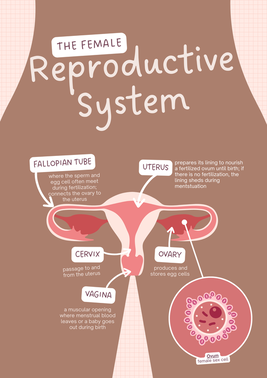
Some Interesting Facts about the Cervix:
It’s dynamic! It changes length, position, & opens/closes. During the height of ovulation, the cervix becomes shorter, more moist, and soft. The cervix rises up to the top of the vagina which allows for better conditions for the sperm to fertilize the egg.
From the start of pregnancy, your cervix develops a thick and sticky layer. This forms the mucus plug that you have during pregnancy. Which protects your baby and bag of waters from microorganisms, bacteria, and viruses.
Your cervix might be hard to find. In non-pregnant people you will sometimes hear this called a tilted uterus. When pregnant, most cervixes are pointed more towards your back until the end of pregnancy or even during labor when it begins to rotate around and line up with the birth canal.
Now that we have labeled, and chatted about the non-pregnant cervix, let’s move into talking about the cervix during pregnancy. We will discuss: what a cervical exam is and what it is not, what cervical checks measure, pros and cons of cervical checks, and how to advocate regarding cervical checks during pregnancy and labor.
What is a Cervical Exam (or cervical check)?
Cervical exams check the cervix for common changes that occur throughout pregnancy and labor!
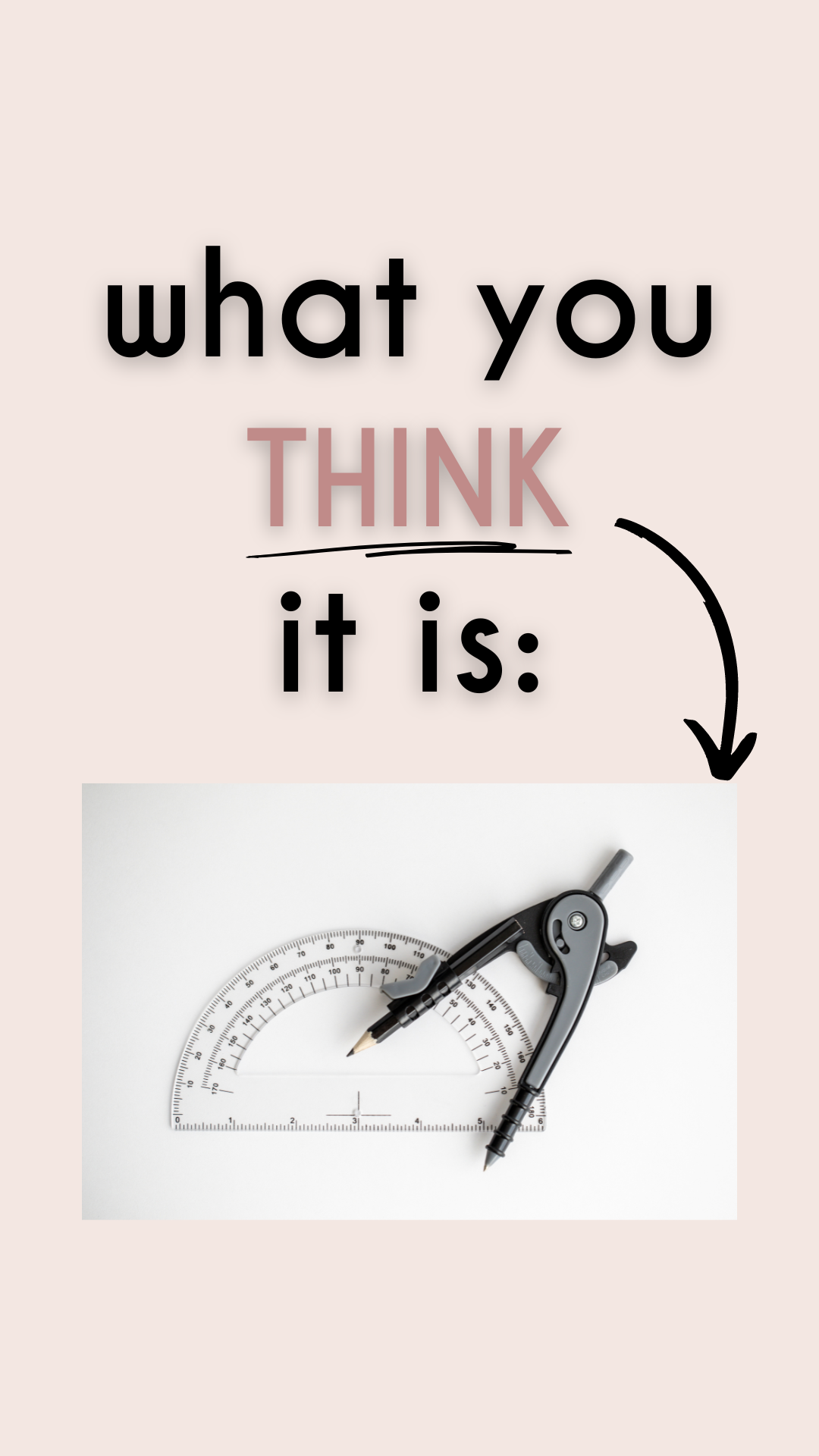
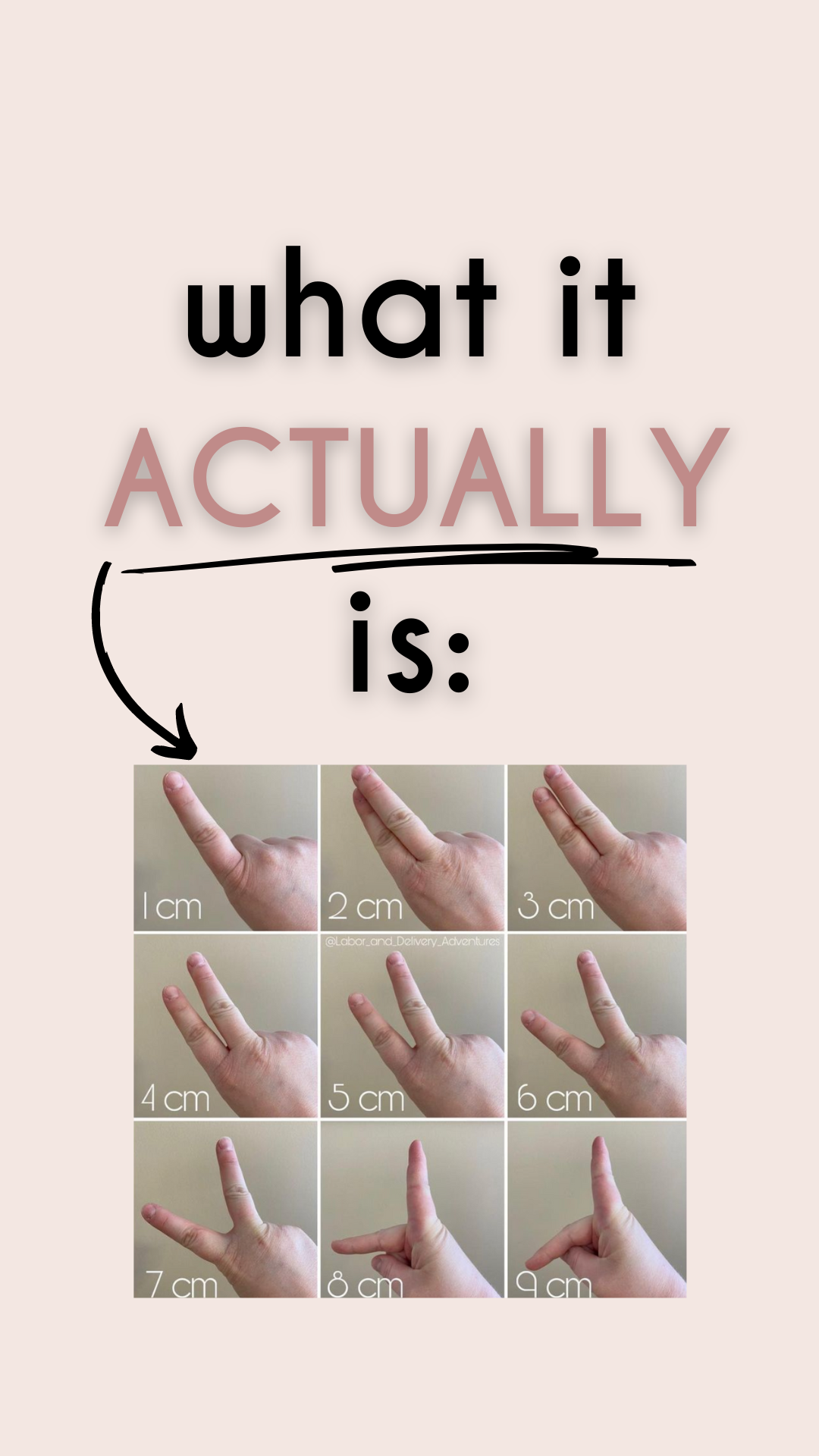
You may think that measuring a cervix is a precise business that includes a special tool. It's not! It is literally someone spacing out their fingers to determine how many centimeters open the cervix is. As you can imagine, this is highly subjective. Many labor care teams work to norm their measurements, but we commonly see one provider like an OB saying one dilation and then a nurse or another care provider saying another. It can really throw you for a loop, but as long as you know, you can temper your expectations of its precision.
What Does a Cervical Check Measure?
Well first, they measure more than just dilation! They actually measure 5 different metrics:
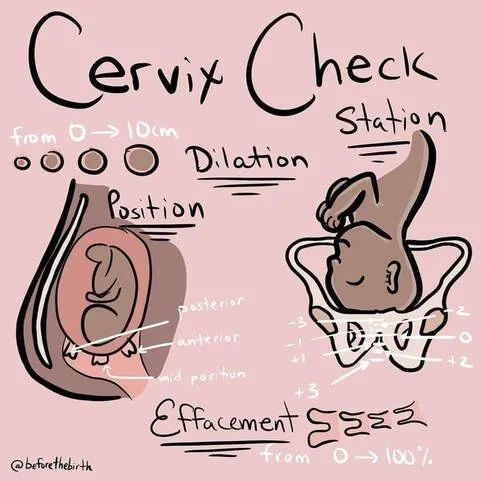
Image by @beforethebirth on Instagram
Consistency is how the cervix feels. It is often hard for most of pregnancy and then begins to soften in the weeks leading up to labor.
Position During pregnancy, the cervix usually points toward your back (posterior). As your body prepares for labor, the position shifts more forward (anterior) so that it is better aligned with the vagina for the baby to be born.
Effacement is the shortening and thinning of the cervix. You will likely hear this in terms of a percent, ex: you are 60% effaced means that the cervix is 60% shorter than before.
Dilation is how open the cervix is. Some pregnant people are dilated at 3 cm for a few weeks before labor and others dilate once labor starts. The cervix dilates to 10 cm (size of a bagel) for baby to emerge.
Station is how far the baby has descended into the pelvis, as labor progresses, the baby moves down. Negative numbers mean the baby is still above the mid pelvis. At -5, the baby is "floating" above the pelvis. At -3, the baby is just entering the pelvis. When the baby's station is at 0, they are considered "engaged" and in the midpelvis. As the baby descends the number increases until the baby is at the perineum at +4 and born at +5.
BONUS: Direction Baby's Head is Facing - Though not always needed, some nurses and providers are able to tell based on the sutures on the top of the baby's head, which direction the baby is facing. This can be helpful in telling us doulas which positions or movements (like spinning babies) might be helpful to get baby in the best position possible.
Pros and Cons of Cervical Checks During Labor
As with many things during birth, there are pros and cons. We believe it is very important to be informed and to know both the positives and negatives of birth options. This stands true for cervical checks as well. Below are *some* of the positives and negatives of cervical checks during labor. Once you know some of these positives and negatives, you can make an informed decision about them for your birth plan and then advocate for your preferences during labor.
CONS:
- introduces bacteria and therefore increases risk of infection
- it can hurt and feel foreign
- can disrupt your labor flow, including getting in an uncomfortable position
- can discourage you if you haven't yet made the progress you were hoping for
- some may pressure you to begin pushing as soon as you reach 10cm, instead of honoring "laboring down" and spontaneous pushing (see previous posts re: pushing)
PROS:
- gives data that can be helpful, such as whether to be admitted to your birth place. As a doula trained in spinning babies, it gives me some additional data points to recommend specific positions or movements to ensure baby is in the best position for a smooth birth.
- can encourage you if you like the way you are progressing
- can give you the go-ahead to push with the urge after 10 cm (we don't want to push before 10 - the cervix can swell)
A Note About Cervical Exams During Pregnancy
Increasingly, routine cervical exams during pregnancy (without specific evidence of need) are going to the wayside, and for good reason. Sometimes you still hear that OB's are requiring cervical exams during pregnancy, sometimes early on, and for all of their patients. We also hear of OB's beginning/restarting cervical exams weekly at 36 weeks. Some offer it and others expect it. We find that there is a fairly reliable overlap with the doctors that do routine cervical checks during pregnancy and those that favor old-school hospital style birthing where they know better and intervene often (inductions, pushing on your back, limiting food and drink, etc.). We find that many of the most consent and evidence-based providers that honor the safest low-intervention path, don't usually have routine cervical exams as part of their pregnancy care protocol.
It might not be the full picture of a provider, but it is a clue.
As always, there are exceptions. For example: if you have a history or there are signs for preterm labor, a cervical exam could be helpful in mapping out your care plan. You, do you.
You Get to Choose
Whether you want cervical checks during pregnancy and/or labor
How often or how many you want
Who performs them (midwife/OBGYN or nurse)
Here are our best tips:
Talk to your provider beforehand! Find a provider that aligns with your wishes regarding cervical checks throughout pregnancy and labor. If you are finding that you and your provider are not aligned on many topics, change providers.
Put it on your birth preferences! Want minimal or no cervical checks during labor? Only want one when you are admitted into the hospital/birth center? Add it to your birth preferences document! It’s another communication point with your birth team.
Advocate during labor! Loop in your partner and doula to help advocate when you are focused on coping and moving through your labor rhythm!
As always, please remember to remain flexible if your body and your baby need something different, both prenatally and during birth.